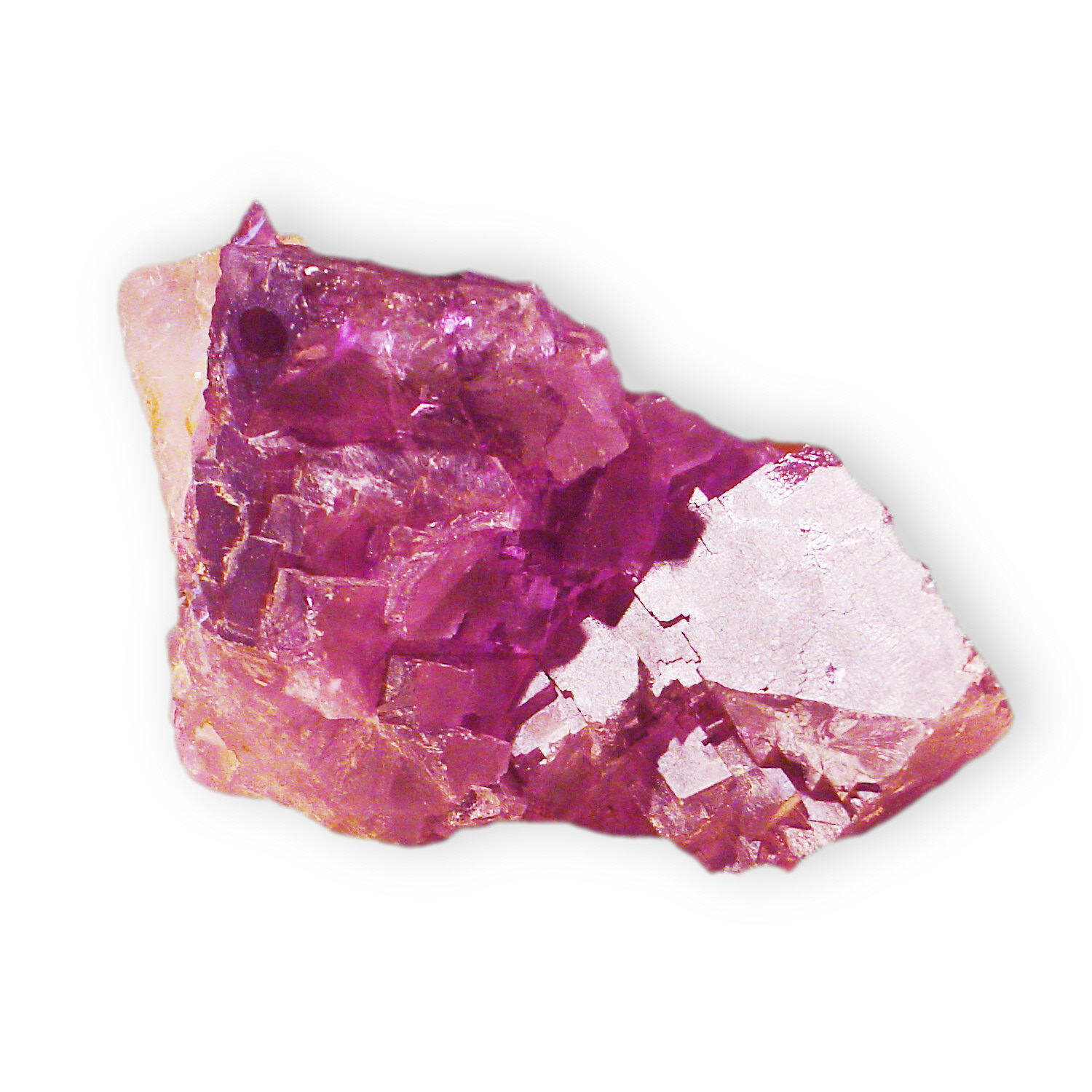
Fluorite
Chemical Composition
Fluorite is a calcium fluoride mineral, with the chemical formula CaF₂.
Origin and Location
Fluorite occurs worldwide and is found in veins associated with hydrothermal deposits, as well as in sedimentary rocks.
Uses and Applications
Fluorite is primarily used in the production of hydrofluoric acid, which is a key component in the manufacture of aluminum and uranium fuel, as well as in the production of fluorine-based chemicals.
History and Discovery
Fluorite was known in antiquity, and its name comes from the Latin word "fluere", meaning "to flow", due to its use as a flux in steelmaking.
Physical Properties
Fluorite has a hardness of 4 on the Mohs scale and typically occurs in cubic crystals. It comes in a variety of colors, including purple, blue, green, yellow, and colorless.
Formation Process
Fluorite forms in low- to medium-temperature hydrothermal veins, often filling cavities and fractures in rocks.
Optical Properties
Fluorite is known for its remarkable fluorescence, glowing under ultraviolet light in various colors depending on the impurity content. It has a vitreous luster and is transparent to translucent.
Classification
Fluorite is classified as a halide mineral, with a cubic crystal system and a chemical composition of calcium fluoride (CaF₂).
Interesting Facts
Fluorite is often used in the production of colored glass and enamels, and is sometimes used as a gemstone in jewelry. It is also a key mineral for scientists studying fluorescence.